> I don't know anyone in this country, urban or rural dwelling, who can't walk to a shop or a pub
The average walking distance to a pub has gone up a lot in recent years due to closure, and walking on rural roads at night where there is no footpath is horrendously dangerous even if you carry lights. It's a nice idyll but it's no longer really true.
What you say about Simcity is absolutely true though. It doesn't correspond to traditional UK or most European cities at all. Medieval mixed walkable core, maybe not driveable at all; industrialish area down by the wharves now repurposed as offices and residential; Simcity-ish bit on the outskirts where somebody decided to build a grand scheme, like La Défense.
Zoning is starting to leak into urban planning a bit more, when huge housing estates are built with no shops, pubs, or facilities. As far as I can tell demand for housing outstrips everything else.
AFAIK, there's no such thing in city planning as "Medieval mixed walkable". Rather, business of the same guild worked in close proximity, so that one wouldn't undercut the others (AKA a price cartel). It's why we have meatpacking districts etc. Maybe it's different in UK, though.
On similar shops operating in close proximity - it makes sense to cluster in order to maximise the number of customers you have access to.
Imagine two ice-cream vendors on the beach, selling identical ice-creams for the same price.
Since number of sales are a function of how far people have to walk to your stand (and price etc), you want to make sure you are as close to as many people as possible.
If your competitor is closer to them, they will go there instead, so you either need to be very far away or right next to the competitor. If a person could visit either of your stands, the competitor can 'steal' them by simply moving their stand closer to yours, so that the customer previously in the middle is now closer to them.
A discussion on the general case is here [0].
This principle obviously doesn't extend flawlessly to the real world, but is a significant contributor to, for example, the clustering of car dealerships today.
What I had in mind was places like Dubrovnik as an extreme example, or York as a less extreme - walled cities in which all the old residential/commercial activity happened. Necessarily dense and walkable. Smaller versions can be seen in "market towns" e.g. Cambridge: central square with occasional street market, surrounded by 2-4 storey buildings with shops on the ground floor and apartments above. Some of which have been converted into offices.
There's a big split between European cities which decided to rebuild exactly as it was after they were bombed flat (or the few that largely escaped), versus those which decided to modernise and become car-oriented. Cambridge vs. Coventry.
Is it true that walking on rural roads at night is horrendously dangerous? I was thinking less traffic means its probably safer than the collisions that happen when pedestrians step off the pavement in town.
I found something that kind of supports this notion but isn’t really conclusive
I think generally speaking people actively avoid walking on country lanes unless there's absolutely no other way of completing the journey. Some are extremely dangerous with sporadic, fast moving traffic (60mph limit on single lane roads with no pavements or usable siding whatsoever - and people will speed on top of that) and often extremely low visibility turns. 16% of pedestrian deaths sounds quite low until you factor in that most people simply don't use them as pedestrians - in a more extreme way, only 1% of pedestrian deaths occur on motorways but that in no way makes them suitable for walking on.
Not that I make a practice of walking on country lanes in the US either, but when I've been on long distance walks in the UK and had to walk on a road for a stretch, there does seem to be a disproportionate number where there's a hedge or a stone wall inches from some twisty turny road surface. I've definitely walked stretches of road where I've felt very exposed, especially if the light was starting to fade.
Interesting about the average walking distance to a pub going up. My rural friends and family must be lucky as they don't seem to have been affected (and here in London you're unlucky if it's more than two mninutes).
I'm not sure about the data for pedestrians being hit on rural roads, though the UK has very low rate of per capita pedestrian fatalities overall, among the lowest in the EU according to [1]. Anecdotally I have never felt unsafe walking on rural raods. I can see how some of the narrower "A" roads (major single carriageway roads with no central reservation, sometimes heavy lorry traffic) might be, though these usually but not always have pavements for pedestrians and if not there's generally an alternative.
Either way, compared to my (admittedly limited) experience of suburban and rural America there is still a big (and welcome) difference. I hope that any downward trend can be arrested/reversed.
>Is it true that walking on rural roads at night is horrendously dangerous?
No. It's not. You just can't expect drivers to see you so you have to take care and step more or less off the road if there isn't a wide shoulder available for your use at that spot. It's not a big deal because cars aren't that frequent.
It's really no different than any industrial workplace where it is expected that the lighter traffic will make way for the heavier traffic.
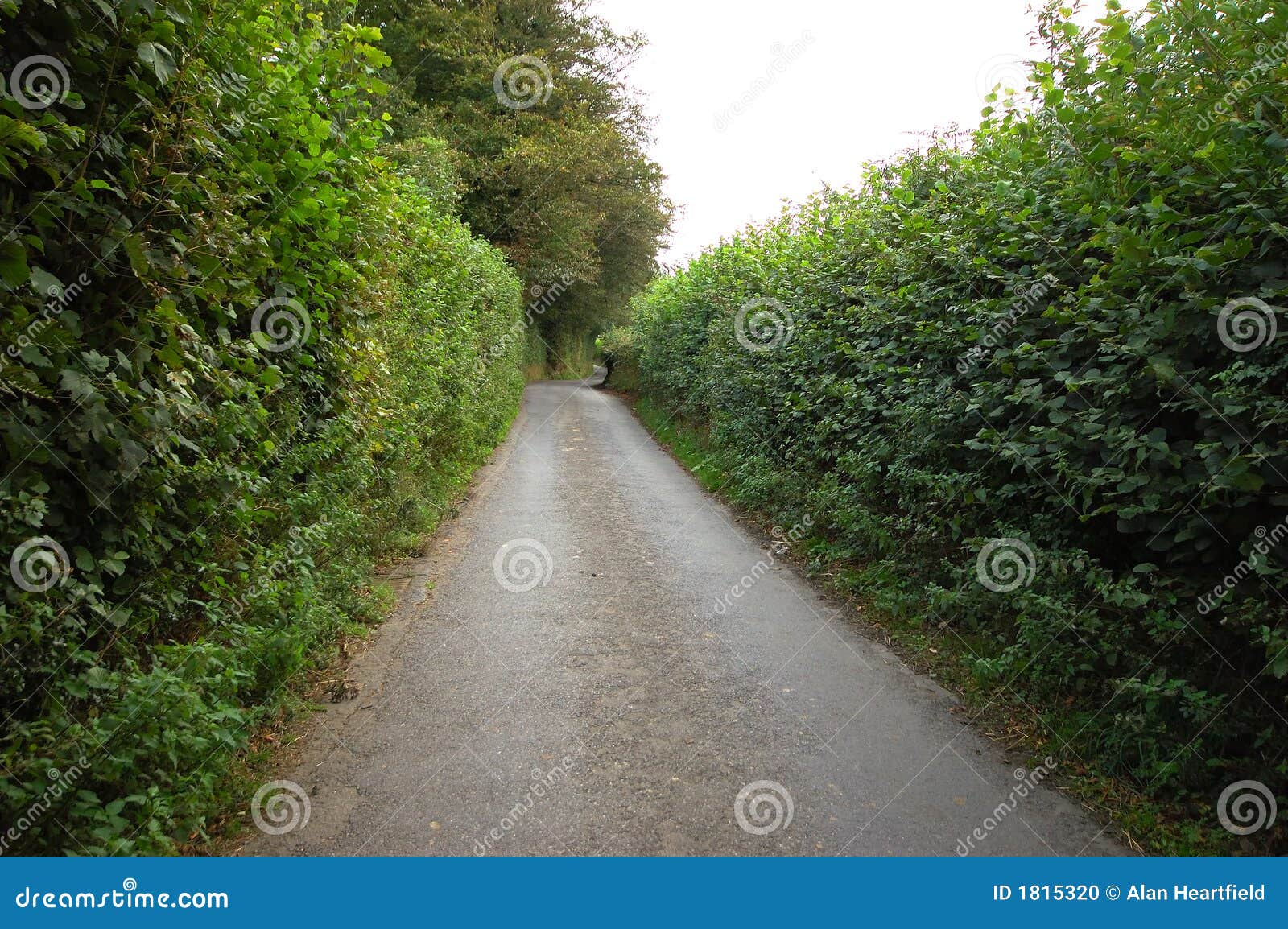
The context here is UK rural areas which are not quite like other places. Imagine a road that can fit 1 car, with wider places every few hundred metres and 2m+ hedges on both sides, immediately next to the road. Apart from specific paths you can't really go into a field.
Not all counties will look like that, but quite a lot of them to. Imagine a network of this kind of roads going on for many miles. You really don't want to walk them at night.
I found myself walking on one of these roads as the sun began to set last summer and it was actually quite terrifying.
We’d made a long loop walking through the hills in the Cotswolds, and the guidebook would have had us crossing a large pasture to get back to the start. At the gate we were confronted by a couple of rowdy young bulls who seemed to have little interest in letting us cross their field, so we took the road instead. Thankfully we could hear cars coming from far away and could position ourselves for maximum visibility in the curves, but it certainly felt like one of the more dangerous miles I’ve ever walked.
On the main topic of this thread, one thing I did note during our two weeks of touring the British countryside was that the network of walking paths and tiny villages made even rural places much more walkable than in the US. One fairly isolated farm we stayed at had a hand drawn guide to getting to multiple nearby-ish pubs via footpaths through the fields. A comparable place in the US would have been 100% car dependent.
I spent some time in the Dallas-Fort-Worth area, staying at a typical suburbian region. This was before I had a car or driver's license.
It was shocking to me how isolated I was. There was a gas station that I could walk to, but even getting to the fast food place that I could see from my house was dangerous because the neighborhood was surrounded by wide roads and fast cars. Whenever my hosts wanted to get fast food, they'd drive there even though it was literally a stone's throw away.
The wider area was even stranger. A high school that you could only really reach by car. A 'proper' city nearby (Fort Worth) where it seemed like nobody thought to make it accessible to pedestrians. multiple cut-and-paste neighborhoods just like the one I stayed at, completely isolated and only accessible by car. And consistently a Walmart/Kroger's/<random shops> area every 20 mins or so, with one 'bigger' shopping area that had no character or charm but at least it had a movie theater and restaurants.
After that experience I understood why having a car is so crucial in the US, but I also started respecting more how difficult it is to avoid things like obesity or pill addiction. it felt so eery and unnatural.
- Carry a torch (flashlight outside the UK ;-) with good batteries, and don't wear dark clothing. Turn on the torch when you see headlights in the distance, make sure it's pointing somewhere visible.
- Walk on the right-hand side of the road (cars drive on the left in the UK). It's marginal on single-lane country roads but cars still tend towards their normal driving side. Better if you can see surprise vehicles coming towards you rather than from behind you, and they can see you facing them.
- Wear retro-reflective clothing / strips if possible.
As long as cars can see you, they slow down to pass just as they will for a car driving in the opposite direction. Which at night they first recognise by headlights, from quite far away and around corners, so light is what they're looking out for.
Definitely don't be dark, as that makes you invisible to cars at night until very close.
For pedestrians, yes that type of road is fairly dangerous. But for cars it's not too bad, drivers know they need to pay attention and nobody is going at high speeds. It's also easier than you might think to see oncoming cars, especially when it's dark and their headlights are on.
Fortunately/unfortunately that type of road is becoming slightly less prevalent, as efficient modern farming means hedges are maintained less than they were historically and they either get chopped down or neglected and end up growing into larger trees that are much easier to see through.
TBH it doesn't seem too safe for cars either. You couldn't possibly see deer or other animals until they had already jumped into the road. Any normal hazard like a car stopped for a flat or lumber that fell off a truck is more hazardous in this situation.
Honestly, these are not common occurrences in England. Cars that are stopped like this are required to post a warning triangle ahead, and lumber just doesn't fall off trucks (lumber isn't very common anyway as the country is mostly devoid of forests).
While I agree that they're bad for sightlines, they're also traditional and may be on private land, so getting rid of them from minor roads would be a hugely unpopular undertaking.
It's interesting to discover a seemingly avoidable hazard to which the British are sentimentally attached. Perhaps it's not quite comparable to our attachment to firearms.
In truly rural areas you can, but I think the areas being referenced are more semi-rural, with single track roads, and fenced off private land or dwellings on the sides. I’ve done that sort of walk a few times and it’s terrifying, especially when you know half the locals are going to be charging round at 60mph because they know the roads.


The average walking distance to a pub has gone up a lot in recent years due to closure, and walking on rural roads at night where there is no footpath is horrendously dangerous even if you carry lights. It's a nice idyll but it's no longer really true.
What you say about Simcity is absolutely true though. It doesn't correspond to traditional UK or most European cities at all. Medieval mixed walkable core, maybe not driveable at all; industrialish area down by the wharves now repurposed as offices and residential; Simcity-ish bit on the outskirts where somebody decided to build a grand scheme, like La Défense.
Zoning is starting to leak into urban planning a bit more, when huge housing estates are built with no shops, pubs, or facilities. As far as I can tell demand for housing outstrips everything else.